




Our Services
We offer a range of loan services designed to meet the diverse financial needs of individuals, groups, and businesses.


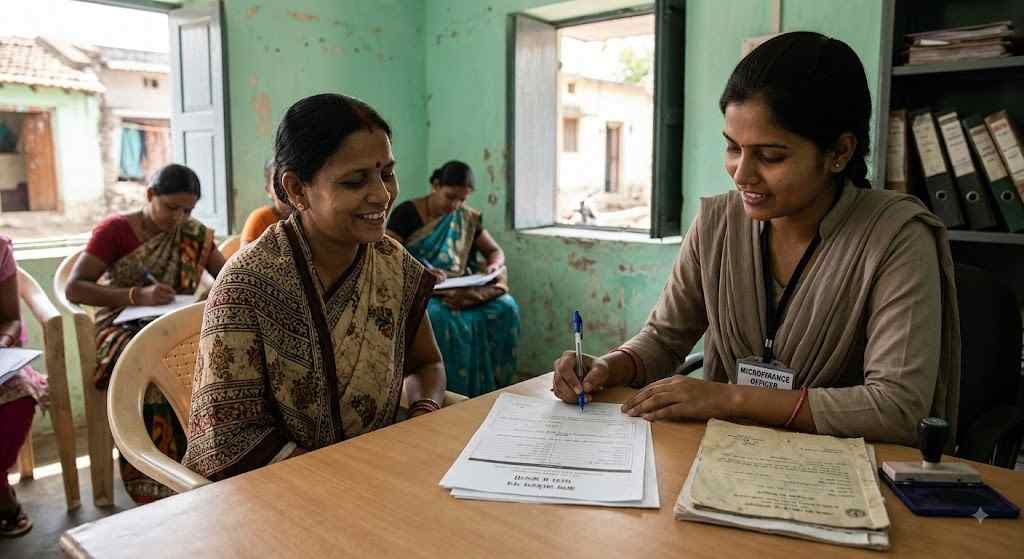




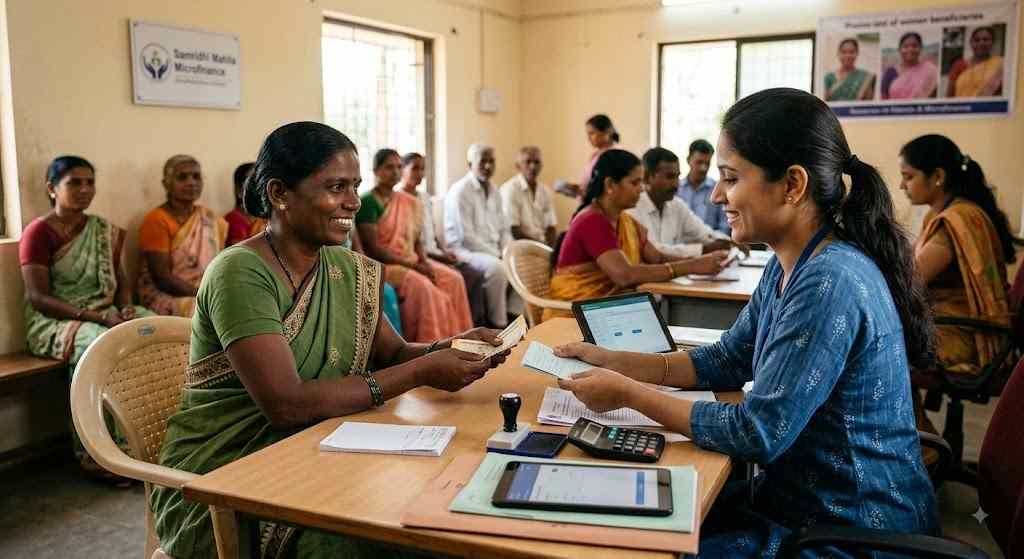
Section-8 Microfinance
Supporting Financial Inclusion and Community Development
Access to appropriate financial services can play an important role in improving livelihoods, supporting small businesses, and creating opportunities for individuals and families with limited access to conventional financial products.
YASH ABHI MICROSERVICES aims to support financial inclusion through responsible, community-oriented microfinance assistance for eligible borrowers, subject to the applicable regulatory framework, lender requirements, and financing arrangements.
Section-8 microfinance can be particularly relevant to individuals and households seeking relatively small amounts of credit for livelihood, income-generating, household, or other permitted requirements.
What is Section-8 Microfinance?
A Section 8 company is a not-for-profit company incorporated under Section 8 of the Companies Act, 2013 for specified social, charitable, educational, or other permitted objectives.
In the microfinance context, RBI has specific provisions concerning not-for-profit companies incorporated under Section 8 that provide microfinance loans. RBI defines a microfinance loan for this framework as a collateral-free loan to a household with annual household income up to ₹3 lakh, subject to the applicable conditions, including the household repayment-obligation limit.
Therefore, Section-8 Microfinance should not simply be treated as another name for a conventional personal or business loan. Its structure, eligibility, regulatory status, and lending arrangements must be understood in the context of the applicable legal and regulatory requirements.
Section-8 Microfinance by YASH ABHI MICROSERVICES
YASH ABHI MICROSERVICES can position its Section-8 microfinance activities around financial inclusion, livelihood support, responsible credit access, and assistance for eligible low-income households and small entrepreneurs.
The approach may include:
- Supporting access to appropriate microfinance facilities
- Assisting eligible borrowers with the application process
- Providing documentation guidance
- Promoting responsible borrowing
- Supporting small income-generating activities
- Encouraging financial awareness
- Maintaining clear communication regarding applicable loan terms
- Supporting borrowers throughout the applicable financing process
The exact nature of the financing arrangement and the role of YASH ABHI MICROSERVICES should always be represented according to its actual legal, regulatory, and operational status.
Objectives of Section-8 Microfinance
1. Promoting Financial Inclusion
One of the key objectives of microfinance is to help eligible individuals and households access formal financial services.
People with limited access to traditional banking or larger credit products may benefit from appropriately structured small-value financial services.
2. Supporting Livelihoods
Microfinance can support eligible income-generating activities such as small trading, services, production, livestock-related activities, and other permitted livelihood activities.
3. Supporting Small Entrepreneurs
Small entrepreneurs often require modest amounts of working capital to purchase inventory, raw materials, tools, or other productive resources.
Appropriate microfinance can help eligible borrowers strengthen their existing activities.
4. Encouraging Women's Economic Participation
Where permitted by the applicable program, group-based and individual microfinance initiatives can support women's participation in income-generating activities and entrepreneurship.
5. Developing Responsible Financial Habits
Microfinance is not only about providing credit. Responsible lending and repayment practices can help borrowers understand budgeting, repayment discipline, and formal financial services.
Who May Be Eligible?
Eligibility depends on the applicable microfinance program, lending institution, and regulatory requirements.
Potential beneficiaries may include:
- Low-income households
- Small entrepreneurs
- Micro-business owners
- Self-employed individuals
- Small traders
- Livelihood-based workers
- Eligible members of community groups
- Women entrepreneurs
- Individuals engaged in approved income-generating activities
Applicants must satisfy the applicable eligibility requirements. No applicant should be promised approval merely because they belong to one of these categories.
What Can Microfinance Support?
Depending on the specific financing product and applicable terms, microfinance may support legitimate requirements such as:
Business Working Capital
Funds may help eligible small businesses purchase inventory, raw materials, or other operating inputs.
Livelihood Activities
Financing may support approved livelihood activities such as small trading, services, production, agriculture-related activities, livestock, or other eligible activities.
Equipment and Tools
Small entrepreneurs may require tools or equipment to improve productivity and income generation.
Household Requirements
Depending on the applicable microfinance product, collateral-free microfinance loans may also cover personal or consumption requirements. RBI's FAQ states that collateral-free loans to qualifying low-income households can fall within the microfinance framework irrespective of end use.
Emergency Requirements
Eligible borrowers may use financing for permitted emergency requirements, subject to the specific loan terms.
Key Principles of Microfinance
Collateral-Free Financing
Under RBI's microfinance framework, a qualifying microfinance loan is collateral-free. The applicable regulatory framework also states that borrowers should not be required to keep a deposit, margin, collateral, or primary security with the lender for a microfinance loan.
Household-Level Assessment
Microfinance eligibility and indebtedness may involve assessment at the household level. RBI's framework requires regulated entities to consider household income and repayment obligations when assessing microfinance borrowers.
Responsible Repayment
Borrowers should take only an amount that they can reasonably repay from their household or business income.
Transparent Terms
Borrowers should receive clear information about the applicable interest rate, fees, repayment schedule, and other important conditions before accepting financing.
Understanding the Household Repayment Obligation
An important aspect of the RBI microfinance framework is the limit concerning household loan repayment obligations.
For qualifying microfinance loans under the framework, monthly loan repayment obligations of a household are subject to a limit of 50% of monthly household income.
This is intended to help prevent excessive indebtedness and promote responsible lending.
The applicable lender must follow its approved methodology and regulatory requirements for assessing household income and indebtedness.
Documents That May Be Required
Documentation depends on the applicable financing program and borrower profile.
Possible documents may include:
- Aadhaar or other acceptable identity proof
- PAN, where applicable
- Address proof
- Recent photographs
- Bank account information
- Household income information
- Details of existing loans
- Business or livelihood information
- Group-related documents, where applicable
- Other documents required by the applicable lending institution
Applicants should always provide genuine and accurate information.
How Section-8 Microfinance Generally Works
Step 1: Understand the Requirement
The borrower identifies the purpose for which financing is required.
Step 2: Eligibility Assessment
The applicable organization or lender assesses the applicant and household according to the relevant eligibility requirements.
Step 3: Household Income and Indebtedness Assessment
Where applicable, household income and existing repayment obligations are considered as part of the responsible-lending process.
Step 4: Documentation
The borrower provides the required identity, address, income, banking, and other information.
Step 5: Credit Assessment
The applicable lending institution conducts its required assessment and verification.
Step 6: Loan Terms
If financing is approved, the borrower receives the applicable loan terms, including the repayment schedule and other conditions.
Step 7: Disbursement
Following completion of the required formalities, funds may be disbursed according to the applicable process.
Step 8: Repayment
The borrower follows the agreed repayment schedule and maintains proper records of payments.
Why Choose YASH ABHI MICROSERVICES?
Focus on Financial Inclusion
YASH ABHI MICROSERVICES can focus on helping eligible individuals and communities understand and access appropriate financial services.
Community-Oriented Approach
A community-focused approach can help create greater awareness about responsible borrowing and financial planning.
Assistance with Documentation
Applicants can receive guidance about the information and documentation required for the applicable financing process.
Support for Small Livelihoods
Microfinance can be particularly useful for eligible borrowers engaged in small-scale income-generating activities.
Responsible Borrowing
The focus should remain on appropriate loan sizes, transparent terms, manageable repayment obligations, and borrower awareness.
Group-Based Microfinance
Microfinance may sometimes be delivered through group-based structures such as Self-Help Groups (SHGs) or Joint Liability Groups (JLGs), depending on the applicable program.
A group structure can encourage:
- Financial discipline
- Regular repayment
- Mutual support
- Community participation
- Better financial awareness
- Collective responsibility where legally applicable
However, borrowers should understand whether their particular agreement creates any joint or shared liability before signing.
Benefits of Microfinance for Small Entrepreneurs
Appropriate microfinance can potentially help eligible entrepreneurs:
- Start or expand small businesses
- Purchase inventory
- Buy raw materials
- Purchase tools and equipment
- Manage working capital
- Develop livelihood activities
- Improve household income
- Create self-employment opportunities
The availability and permitted use of financing depend on the applicable loan product.
Responsible Microfinance
Responsible lending is an important part of sustainable microfinance.
Borrowers should:
- Borrow only what they can reasonably repay.
- Understand the complete repayment obligation.
- Disclose existing loans and financial commitments accurately.
- Read the loan documentation carefully.
- Understand all applicable fees and charges.
- Maintain records of repayments.
- Avoid borrowing from multiple sources beyond their repayment capacity.
- Ask questions whenever any loan term is unclear.
Borrower Awareness and Transparency
A borrower should receive clear information regarding the financing being offered.
Important information may include:
- Loan amount
- Interest rate
- Repayment frequency
- Number of installments
- Total repayment obligation
- Processing fees
- Other applicable charges
- Late-payment consequences
- Prepayment provisions, where applicable
- Grievance-redress mechanism
- Contact details for the applicable lender or authorized entity
RBI's FAQ also notes that regulated lenders should provide borrowers with a loan card containing specified information in a language understood by the borrower.
Frequently Asked Questions
What is Section-8 Microfinance?
Section-8 microfinance refers to microfinance activities undertaken by or through a not-for-profit Section 8 company in accordance with the applicable legal and regulatory framework.
Is every Section 8 company a microfinance institution?
No. Being incorporated under Section 8 does not automatically make a company an NBFC-MFI or authorize it to conduct regulated lending activities. The organization's actual regulatory status and permissions must be verified.
Are Section-8 microfinance loans collateral-free?
Qualifying microfinance loans under the applicable RBI framework are collateral-free. The specific eligibility and regulatory conditions must be satisfied.
Who can receive microfinance?
The applicable RBI definition covers collateral-free loans to qualifying low-income households, subject to the relevant income and other conditions. The lender's own eligibility criteria also apply.
Can microfinance be used for business purposes?
Yes, where permitted by the applicable financing product. Microfinance can support eligible livelihood and income-generating activities.
Is loan approval guaranteed?
No. Approval depends on eligibility, verification, household income, existing indebtedness, credit assessment, documentation, repayment capacity, and the applicable lender's policies.
Does microfinance always require a group?
No. Microfinance may be provided to individual borrowers as well as through group-based mechanisms, depending on the applicable product and lender.
Our Vision
YASH ABHI MICROSERVICES aims to contribute to a more financially inclusive environment by supporting responsible access to appropriate microfinance services.
The goal is not simply to provide access to credit, but to encourage responsible financial behavior, sustainable livelihoods, transparent communication, and informed borrowing decisions.
Building Stronger Communities Through Financial Inclusion
Small amounts of appropriately structured finance can help individuals invest in their livelihoods, manage legitimate financial requirements, and build sustainable sources of income.
Through a responsible and community-focused approach, YASH ABHI MICROSERVICES can support eligible borrowers in understanding microfinance and navigating the applicable financing process.
YASH ABHI MICROSERVICES
Section-8 Microfinance for Financial Inclusion and Livelihood Support
Regulatory Disclaimer: Microfinance activities are subject to applicable laws, regulations, notifications, and the regulatory status of the entity actually providing or facilitating the loan. A Section 8 company should not be represented as an NBFC, NBFC-MFI, bank, or direct lender unless it has the relevant authorization/registration. Loan approval, loan amount, interest rate, tenure, charges, and disbursement are subject to applicable eligibility criteria and official terms. Customers should verify the identity and regulatory status of the actual lending entity and carefully review official loan documentation before accepting financing.








Small Loan
Simple Financial Support for Small but Important Needs
Sometimes a relatively small amount of additional funding can make a meaningful difference. Whether it is required for a household expense, a small business activity, working capital, an emergency requirement, or another legitimate financial need, a Small Loan can provide eligible borrowers with access to appropriate financing.
YASH ABHI MICROSERVICES aims to assist individuals, small entrepreneurs, self-employed persons, and eligible borrowers in understanding small-loan options and navigating the applicable financing process.
The objective is to make the process easier to understand while encouraging responsible borrowing and transparent communication about applicable loan terms.
What is a Small Loan?
A small loan is a relatively modest amount of financing provided to an eligible borrower for an approved or permitted purpose.
Small loans may be useful when a borrower does not require a large amount of capital but needs additional funds to manage a short-term requirement or support a small income-generating activity.
The actual loan amount, interest rate, repayment period, fees, eligibility requirements, and permitted purpose depend on the applicable lender and loan product.
Small Loan Assistance by YASH ABHI MICROSERVICES
YASH ABHI MICROSERVICES can provide assistance in understanding the general small-loan application process and requirements.
The service may focus on:
- Understanding the customer's financial requirement
- Explaining general eligibility requirements
- Providing documentation guidance
- Helping applicants organize required information
- Explaining repayment obligations
- Helping customers understand applicable loan terms
- Supporting customers through the applicable application process
The final decision regarding approval, loan amount, interest rate, tenure, and other terms is made by the applicable lending institution.
Who May Consider a Small Loan?
Depending on the applicable loan product and lender criteria, small-loan financing may be relevant to:
- Small business owners
- Shopkeepers and traders
- Self-employed individuals
- Micro-entrepreneurs
- Daily-income or regular-income earners who meet applicable criteria
- Service providers
- Small producers
- Eligible salaried individuals
- Individuals with short-term financial requirements
Eligibility varies according to the lender and the applicant's financial profile.
Common Uses of a Small Loan
A small loan may be considered for various legitimate purposes, subject to the applicable loan agreement.
1. Small Business Working Capital
Small businesses often require additional funds for everyday operations.
Financing may help eligible entrepreneurs manage:
- Inventory purchases
- Raw materials
- Supplier payments
- Small operating expenses
- Business-related cash-flow requirements
2. Stock and Inventory
Retailers and small traders may need additional funds to purchase stock, especially during periods of increased demand.
3. Business Equipment
Small businesses may require tools, computers, machinery, or other equipment to improve their operations.
4. Emergency Requirements
Unexpected expenses can sometimes create temporary financial pressure. Eligible borrowers may explore small-loan financing for permitted emergency or personal requirements.
5. Household Requirements
Depending on the loan product, financing may be available for eligible personal or household expenses.
6. Income-Generating Activities
Small loans can potentially support eligible activities intended to generate or improve income, such as small trading, services, production, or other approved livelihood activities.
Key Features to Consider
Appropriate Loan Size
A small loan should be based on the borrower's actual requirement and repayment capacity rather than simply borrowing the maximum available amount.
Manageable Repayment
Borrowers should choose a repayment schedule that fits their regular income and financial obligations.
Clear Loan Terms
Applicants should understand the interest rate, total repayment amount, fees, charges, tenure, and other applicable conditions before accepting a loan.
Simple Application Process
A well-organized application process can make it easier for customers to provide the required information and documentation.
Responsible Borrowing
The objective of financing should be to address a genuine financial requirement without creating an unsustainable repayment burden.
Documents That May Be Required
The exact documents depend on the lender, loan product, and borrower profile.
Commonly requested documents may include:
- Aadhaar or other acceptable identity proof
- PAN card, where applicable
- Address proof
- Recent photograph
- Bank account details
- Bank statements
- Income information
- Business or employment details
- Proof of business activity, where applicable
- Details of existing loans or financial obligations
- Other documents requested by the applicable lender
Applicants should provide only genuine and accurate information.
How the Small Loan Process Generally Works
Step 1: Determine Your Requirement
Identify the actual amount you need and the purpose for which you intend to use the funds.
Step 2: Check Eligibility
The applicable lender may evaluate your income, credit profile, repayment capacity, employment or business activity, and other factors.
Step 3: Prepare Documentation
Provide the identity, address, banking, income, business, and other documents requested by the lender.
Step 4: Submit the Application
Complete the application accurately through the applicable authorized process.
Step 5: Verification
The lender may verify the information and documents submitted and perform its required credit assessment.
Step 6: Review the Offer
If approved, carefully review the loan amount, interest rate, repayment schedule, fees, charges, and other terms.
Step 7: Disbursement
After completion of the required formalities, the approved funds may be disbursed according to the applicable lender's process.
Why Consider YASH ABHI MICROSERVICES?
Customer-Focused Assistance
YASH ABHI MICROSERVICES can focus on understanding customers' requirements and helping them navigate the financing process.
Easy-to-Understand Guidance
Loan terminology and documentation can sometimes be confusing. Clear guidance can help applicants better understand what is required.
Documentation Support
Applicants can receive guidance regarding the types of documents that may be requested during the financing process.
Process Assistance
Customers can be guided through the general stages of an application, from understanding requirements to reviewing applicable loan terms.
Responsible Financial Approach
Borrowers should be encouraged to evaluate their repayment ability and understand the complete cost of borrowing before accepting financing.
Small Loan Eligibility
Eligibility may depend on several factors, including:
- Age
- Income
- Employment or business activity
- Credit history
- Existing financial obligations
- Banking history
- Repayment capacity
- Residential or business details
- Loan purpose
- Lender-specific requirements
Meeting eligibility criteria does not guarantee approval.
Important Things to Check Before Taking a Small Loan
Before accepting financing, borrowers should carefully review:
- Loan amount
- Interest rate
- Total repayment amount
- Number and frequency of installments
- Processing fees
- Documentation charges, if applicable
- Late-payment charges
- Prepayment or foreclosure conditions, if applicable
- Any insurance or other optional/mandatory charges
- Consequences of missed payments
Borrowers should ask for clarification if any term is unclear.
Benefits of Responsible Small-Loan Financing
When appropriately used, small-scale financing can help eligible borrowers:
- Manage temporary cash-flow requirements
- Maintain small-business operations
- Purchase inventory
- Invest in productive assets
- Address legitimate short-term needs
- Support income-generating activities
- Manage planned expenses
However, borrowing should always be based on realistic repayment capacity.
Frequently Asked Questions
What is a small loan?
A small loan is a relatively modest financing facility provided to an eligible borrower for a permitted purpose under the applicable lender's terms.
Who can apply?
Depending on the loan product, eligible individuals, small-business owners, self-employed persons, traders, and other qualifying applicants may apply.
Is approval guaranteed?
No. Approval depends on the applicable lender's eligibility requirements, verification, credit assessment, documentation, and repayment-capacity assessment.
How much can I borrow?
The available amount varies according to the lender, product, applicant profile, income, credit history, repayment capacity, and other factors. A specific amount should not be promised unless officially confirmed.
What can I use a small loan for?
Permitted uses depend on the specific financing product. They may include eligible business working capital, inventory, equipment, livelihood activities, or personal requirements.
What documents are needed?
Requirements vary. Identity proof, address proof, bank statements, income information, business or employment details, and other documents may be requested.
Can a small loan help my business?
It may help eligible businesses manage working capital, purchase inventory, acquire small equipment, or meet other approved business requirements.
Responsible Borrowing Matters
A small loan may involve a smaller principal amount, but it is still a financial commitment.
Before borrowing, consider:
- Whether the loan is genuinely necessary.
- Whether the EMI or installment is affordable.
- The total cost of the loan.
- Your existing financial commitments.
- The consequences of delayed repayment.
- Whether the loan purpose is permitted under the applicable agreement.
Borrow only what you can reasonably repay.
Your Financial Needs, Our Assistance
Small financial requirements can be important for individuals, families, and small businesses. With appropriate financing and responsible repayment, borrowers may be able to manage immediate requirements while continuing to work toward their financial goals.
YASH ABHI MICROSERVICES aims to provide customer-focused assistance and clear guidance throughout the small-loan journey.
YASH ABHI MICROSERVICES
Small Loan Assistance for Personal and Small-Business Needs
Disclaimer: Small-loan financing is subject to eligibility, documentation, verification, credit assessment, and the terms and conditions of the applicable lending institution. Loan approval, loan amount, interest rate, tenure, fees, charges, and disbursement are not guaranteed. Customers should carefully review all applicable terms and official loan documentation before accepting financing. YASH ABHI MICROSERVICES should not be described as a bank, NBFC, microfinance institution, or direct lender unless its applicable regulatory status and authorization have been independently verified.







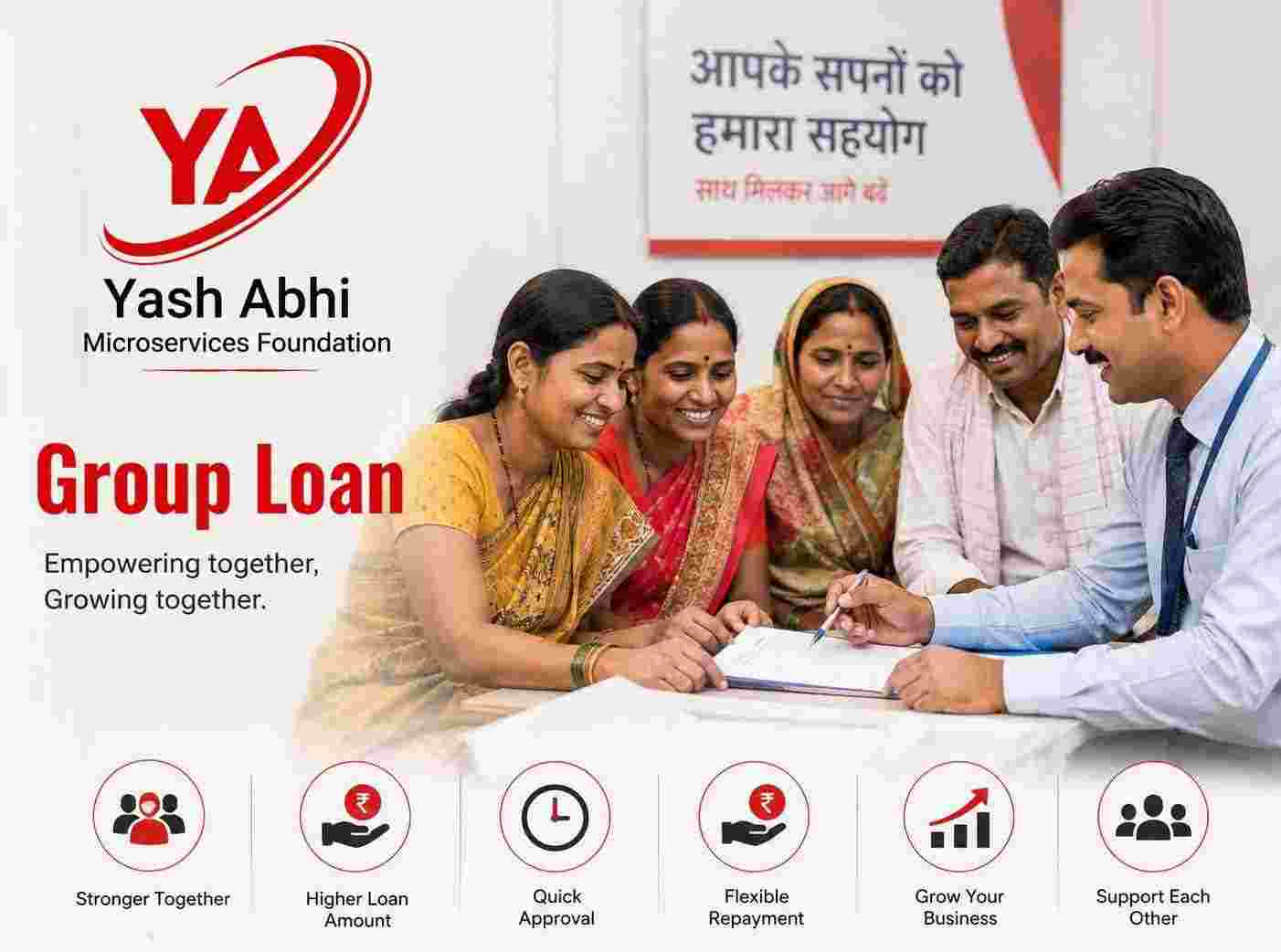
Group Loan
Financial Support Through Group-Based Lending
Access to suitable finance can help individuals and small entrepreneurs strengthen their livelihoods, manage business requirements, and pursue income-generating opportunities.
A Group Loan is a financing arrangement in which eligible individuals come together as a group to access credit, generally under a group-based lending structure. Depending on the applicable lending institution and product, members may share certain responsibilities relating to repayment and group discipline.
YASH ABHI MICROSERVICES aims to assist eligible customers in understanding group-loan requirements and navigating the financing process through a structured and customer-focused approach.
What is a Group Loan?
A group loan is a form of financing designed for a group of individuals who meet the applicable eligibility requirements.
Instead of evaluating only an individual borrower, group-based lending may involve a structure in which members participate collectively and follow agreed repayment procedures.
Group loans are commonly associated with microfinance and small-income-generating activities, although the exact structure, eligibility, loan size, repayment schedule, security requirements, and member responsibilities depend on the applicable lending institution and product.
Group Loan Assistance by YASH ABHI MICROSERVICES
YASH ABHI MICROSERVICES can support customers in understanding the general group-loan process and requirements.
The focus can include:
- Explaining the general group-loan process
- Helping prospective members understand eligibility requirements
- Providing guidance regarding documentation
- Supporting group formation and application preparation where applicable
- Explaining repayment responsibilities
- Helping customers understand important loan terms
- Assisting applicants in navigating the applicable financing process
The final decision regarding financing, eligibility, loan amount, interest rate, and other conditions is made by the applicable lending institution.
Who Can Consider a Group Loan?
Depending on the applicable product and lender, group financing may be suitable for eligible individuals who share a common financial objective or participate in income-generating activities.
Potential participants may include:
- Small entrepreneurs
- Micro-business owners
- Small traders
- Self-employed individuals
- Small producers
- Eligible members of community-based groups
- Individuals involved in livelihood or income-generating activities
- Other qualifying borrowers under the applicable group-lending program
Eligibility requirements vary and should be confirmed before applying.
How Group Lending Generally Works
A typical group-lending structure may involve the following stages:
1. Formation of the Group
Eligible individuals may form a group according to the requirements of the applicable lending institution.
2. Group Assessment
The lender may evaluate the group and individual members according to its policies.
3. Documentation and Verification
Members may be required to provide identity, address, income, business, banking, and other relevant documents.
4. Loan Assessment
The lender may assess the members' financial profiles, repayment capacity, credit history, purpose of financing, and other relevant factors.
5. Approval and Documentation
If approved, the applicable loan terms are communicated to the borrowers. Members should carefully review the terms before signing any agreement.
6. Disbursement
Following completion of the required formalities, the approved financing may be disbursed according to the lender's process.
7. Regular Repayment
Members are required to follow the agreed repayment schedule. Depending on the group-loan structure, members may have individual and/or group-level responsibilities.
Benefits of Group-Based Financing
Collective Approach
A group structure can encourage members to work together and maintain regular repayment discipline.
Access to Financing
Group-based lending can provide an avenue for eligible borrowers who require financing for small business or livelihood-related activities, subject to lender criteria.
Encourages Financial Discipline
Regular meetings, repayment schedules, and group responsibilities may encourage borrowers to develop disciplined financial practices.
Support for Small Entrepreneurs
Group financing can be useful for individuals who require relatively small amounts of capital for eligible income-generating activities.
Community Participation
A properly structured group can promote cooperation and mutual support among its members.
Possible Uses of Group Loan Funds
The permitted use of financing depends on the applicable loan product and lender.
Depending on the terms, financing may potentially support:
- Small business activities
- Inventory purchases
- Raw materials
- Livestock or agricultural-related activities
- Small trading activities
- Equipment or tools
- Working capital
- Income-generating activities
- Other approved livelihood requirements
Borrowers should use the funds only for purposes permitted under their loan agreement.
Group Member Responsibilities
Group lending requires members to understand their responsibilities clearly.
Members should:
- Provide accurate information and genuine documents
- Attend required meetings or interactions
- Understand the loan agreement
- Make repayments on time
- Maintain communication with the applicable lender
- Inform the appropriate authority about significant changes affecting repayment
- Avoid taking on debt that they cannot reasonably repay
- Understand whether the group structure creates any shared repayment responsibility
Each member should fully understand the legal and financial consequences of the applicable group-loan agreement before accepting financing.
Documents That May Be Required
Documentation varies according to the lender and group-loan product.
Possible documents may include:
- Aadhaar or other acceptable identity proof
- PAN, where applicable
- Address proof
- Passport-size photographs
- Bank account information
- Proof of business or livelihood activity
- Income-related information
- Group-related documentation
- Details of existing financial obligations
- Other documents requested by the applicable lender
Only genuine and accurate documents should be submitted.
Group Loan Eligibility
Eligibility may depend on several factors, including:
- Age of applicants
- Residential location
- Group composition
- Income or livelihood activity
- Business activity
- Credit history
- Existing financial obligations
- Repayment capacity
- Group structure
- Lender-specific requirements
Meeting basic eligibility requirements does not guarantee approval.
Why Consider YASH ABHI MICROSERVICES?
Customer-Centric Approach
YASH ABHI MICROSERVICES can focus on understanding the requirements of individuals and groups and providing clear information about the financing process.
Simple Process Guidance
Group loans involve multiple participants and responsibilities. Clear communication can help members understand the process before making a financial commitment.
Documentation Guidance
Applicants can receive assistance in understanding the types of documents and information that may be requested.
Group-Oriented Support
The group structure requires coordination between members. Proper guidance can help applicants understand their respective responsibilities.
Responsible Borrowing
Customers should be encouraged to evaluate their repayment capacity before accepting financing and to understand all applicable costs and obligations.
Important Factors to Check Before Taking a Group Loan
Before joining or accepting group financing, every member should understand:
- Total loan amount
- Individual loan amount
- Interest rate
- Repayment frequency
- Number of installments
- Total repayment obligation
- Processing fees and other charges
- Late-payment consequences
- Prepayment or foreclosure conditions, if applicable
- Individual repayment responsibility
- Any group-level or joint liability provisions
- Permitted use of loan funds
The exact terms should always be confirmed from the official loan agreement and applicable lender documentation.
Frequently Asked Questions
What is a group loan?
A group loan is a financing arrangement in which eligible individuals obtain credit through a group-based lending structure. The exact structure and member responsibilities depend on the applicable lender.
Who can apply for a group loan?
Eligible individuals who meet the lender's requirements and participate in an approved group structure may be able to apply.
Does every group member receive a loan?
Not necessarily. Individual eligibility and approval may be assessed according to the applicable lender's policies and the specific financing product.
Is group-loan approval guaranteed?
No. Approval is subject to eligibility, verification, credit assessment, documentation, repayment capacity, and the lender's policies.
What can a group loan be used for?
Depending on the product, financing may support eligible business, livelihood, working-capital, inventory, equipment, or other approved purposes.
Are group members responsible for each other's loans?
This depends entirely on the specific group-lending structure and loan agreement. Members should carefully understand whether any joint or shared repayment obligation applies before signing.
What happens if a member misses a repayment?
The consequences depend on the applicable loan agreement and lender policy. Members should understand the repayment and default provisions before accepting the financing.
Responsible Group Borrowing
Group financing can provide valuable support for eligible individuals, but borrowers should not treat a loan as free money.
Before accepting financing, each member should:
- Understand the total amount being borrowed.
- Confirm the interest rate and applicable charges.
- Understand the repayment schedule.
- Assess whether the expected income can support repayment.
- Read the loan agreement carefully.
- Understand any individual or group-level liability.
- Keep records of repayments and official communications.
- Seek clarification about any term they do not understand.
Responsible borrowing protects both individual borrowers and the group as a whole.
Building Opportunities Through Group Financing
For many small entrepreneurs and income-generating individuals, access to appropriate finance can support the development of sustainable economic activities.
A well-managed group can encourage financial discipline, cooperation, and accountability while helping eligible members access financing for approved purposes.
YASH ABHI MICROSERVICES aims to make the group-financing journey easier to understand by providing customer-focused assistance and guidance throughout the applicable process.
YASH ABHI MICROSERVICES
Group Loan Assistance for Small Entrepreneurs and Eligible Borrowers
Disclaimer: Group-loan financing is subject to eligibility, documentation, verification, credit assessment, and the terms and conditions of the applicable lending institution. Loan approval, loan amount, interest rate, tenure, fees, charges, and disbursement are not guaranteed. Group members should carefully review their individual and collective responsibilities, where applicable, before accepting financing. YASH ABHI MICROSERVICES should not be described as a bank, NBFC, microfinance institution, or direct lender unless its applicable regulatory status and authorization have been independently verified. Customers should verify all loan terms through the authorized lender and official documentation before making a financial commitment.








Personal Loan
Financial Support for Your Personal Needs
Unexpected expenses and important life goals can sometimes require additional financial support. A Personal Loan can provide eligible individuals with access to funds for a variety of legitimate personal requirements.
YASH ABHI MICROSERVICES aims to assist customers in understanding personal-loan options and navigating the financing process in a simple, organized, and customer-focused manner.
Whether you need funds for a planned personal expense, education, a family requirement, medical or emergency expenses, home-related needs, travel, debt management, or another eligible purpose, personal financing may provide the flexibility you need—subject to the applicable lender's eligibility criteria.
What is a Personal Loan?
A personal loan is a form of financing generally provided to eligible individuals for personal requirements.
Unlike loans designed specifically for purchasing a particular asset, a personal loan may offer greater flexibility in how the approved funds are used, subject to the terms of the applicable lender.
The loan is generally repaid through scheduled installments over an agreed period. The applicable interest rate, loan amount, tenure, processing charges, and other conditions depend on the lender and the applicant's financial profile.
Personal Loan Assistance by YASH ABHI MICROSERVICES
YASH ABHI MICROSERVICES can assist customers in understanding the personal-loan process and the information generally required when exploring financing options.
The service can focus on:
- Understanding the customer's financial requirement
- Explaining the general application process
- Providing guidance regarding documentation
- Helping customers organize required information
- Explaining important loan terms and repayment obligations
- Supporting customers through the applicable application process
The final decision regarding loan approval and loan terms rests with the applicable lending institution.
Who Can Consider a Personal Loan?
Personal-loan eligibility varies between lenders and loan products. Depending on the applicable criteria, potential applicants may include:
- Salaried employees
- Self-employed individuals
- Professionals
- Business owners
- Eligible individuals with a regular source of income
- Other applicants who meet the lender's requirements
Applicants may be assessed on factors such as income, employment or business profile, credit history, existing financial obligations, age, repayment capacity, and other lender-specific criteria.
Common Reasons for Taking a Personal Loan
A personal loan may be considered for a variety of legitimate personal requirements.
1. Emergency Expenses
Unexpected expenses can put pressure on household finances. Eligible personal financing may provide additional funds when savings are insufficient.
2. Medical and Healthcare Expenses
A personal loan may be considered for eligible healthcare-related expenses, depending on the applicant's requirements and the applicable lender's terms.
3. Education Expenses
Individuals or families may explore personal financing to manage certain education-related expenses where permitted by the applicable loan product.
4. Wedding and Family Functions
Major family events can involve significant expenses. Eligible applicants may consider personal financing to manage such costs.
5. Home-Related Expenses
Funds may potentially be used for eligible home-related requirements, renovation, repairs, furniture, or other personal expenses, depending on the lender's terms.
6. Travel and Lifestyle Requirements
Applicants may also explore personal loans for eligible travel or other personal expenses where permitted under the applicable financing terms.
7. Debt Management
In certain circumstances, individuals may explore financing to reorganize existing financial obligations. However, borrowers should carefully compare the total cost before replacing or consolidating existing debt.
Key Features to Consider
When evaluating a personal loan, applicants should carefully review the following factors.
Loan Amount
The amount available depends on the lender's policies, applicant income, credit profile, repayment capacity, and other eligibility criteria.
Interest Rate
The interest rate directly affects the cost of borrowing. Applicants should compare the applicable rate and total repayment amount rather than considering only the advertised monthly installment.
Repayment Tenure
Personal loans are generally repaid over an agreed tenure. A longer repayment period can reduce the monthly installment but may increase the total interest paid.
Processing Fees and Other Charges
Applicants should review all applicable fees, including processing charges, taxes, late-payment charges, prepayment or foreclosure charges, and any other applicable costs.
Convenient Application Process
A clear and organized application process can make it easier for applicants to provide the information and documents required by the applicable lender.
Documents That May Be Required
The exact documents depend on the lender and the applicant's profile.
Commonly requested documents may include:
- PAN card
- Aadhaar or other acceptable identity proof
- Address proof
- Recent photographs
- Salary slips for salaried applicants
- Bank account statements
- Income-tax returns, where applicable
- Form 16, where applicable
- Employment or business details
- Proof of income
- Details of existing financial obligations
Applicants should provide genuine, accurate, and up-to-date documents through the authorized application process.
How the Personal Loan Process Generally Works
Step 1: Identify Your Requirement
Determine how much financing you actually need and the purpose for which you require the funds.
Step 2: Review Eligibility
The applicable lender may evaluate income, employment or business profile, credit history, existing liabilities, repayment capacity, and other factors.
Step 3: Prepare Your Documents
Keep the necessary identity, address, income, banking, and employment/business documents ready.
Step 4: Submit the Application
Complete the application with accurate personal and financial information through the applicable authorized process.
Step 5: Verification and Credit Assessment
The lender may verify the information provided and conduct its required credit and eligibility assessment.
Step 6: Review the Loan Offer
If the application is approved, carefully review the applicable loan amount, interest rate, tenure, EMI, fees, charges, and other terms.
Step 7: Disbursement
After completion of the required formalities and documentation, the approved amount may be disbursed according to the lender's process.
Why Choose YASH ABHI MICROSERVICES?
Customer-Focused Assistance
YASH ABHI MICROSERVICES can focus on helping customers understand their financing requirements and the general personal-loan process.
Simple Guidance
Financial terminology can sometimes be difficult to understand. Clear communication can help applicants make better-informed decisions.
Documentation Support
Applicants can receive guidance regarding the types of documents and information that may be required for their application.
Process Assistance
From understanding eligibility requirements to organizing documentation, the focus can be on making the application journey easier to navigate.
Responsible Financial Approach
Customers should be encouraged to understand the complete cost of borrowing and choose financing that is appropriate for their repayment capacity.
Personal Loan Eligibility
Personal-loan eligibility is not the same for every applicant.
Lenders may consider:
- Age
- Monthly income
- Employment stability
- Business income, where applicable
- Credit history
- Existing loans and liabilities
- Banking history
- Repayment capacity
- Residential or employment details
- Other lender-specific criteria
Meeting basic eligibility requirements does not guarantee loan approval.
Important Things to Check Before Taking a Personal Loan
Before accepting a personal loan, applicants should carefully consider:
- How much money do I actually need?
- Can I comfortably afford the monthly EMI?
- What is the total repayment amount?
- What interest rate is being offered?
- What processing and other charges apply?
- Are there prepayment or foreclosure charges?
- What happens if an EMI is paid late?
- Will taking the loan affect my ability to manage existing financial commitments?
Responsible borrowing means choosing an amount and repayment schedule that fits comfortably within your financial capacity.
Frequently Asked Questions
What is a personal loan?
A personal loan is financing provided to an eligible individual for approved personal requirements. The specific terms and permitted uses depend on the applicable lender and loan product.
Who can apply for a personal loan?
Eligible salaried employees, self-employed individuals, professionals, business owners, and other qualifying applicants may be able to apply, depending on lender-specific criteria.
Is personal-loan approval guaranteed?
No. Approval is subject to the applicable lender's eligibility criteria, verification, credit assessment, documentation, and repayment-capacity assessment.
What documents are generally required?
Applicants may be asked to provide identity and address proof, income documents, bank statements, employment or business information, and other documents required by the lender.
How much personal loan can I get?
The available loan amount depends on the applicable lender and factors such as income, credit profile, existing liabilities, repayment capacity, and other eligibility criteria.
How long does repayment take?
The repayment tenure depends on the applicable loan product and lender. Applicants should choose a tenure after considering both the monthly EMI and total interest cost.
Does a personal loan affect credit history?
Applying for and repaying credit can affect a person's credit profile. Timely repayment can help maintain a healthy credit history, while missed or delayed payments can negatively affect creditworthiness.
Make an Informed Financial Decision
A personal loan can be useful when additional funds are required, but it is also a financial obligation that should be considered carefully.
YASH ABHI MICROSERVICES aims to provide customer-focused assistance so that individuals can better understand the personal-financing process, documentation requirements, and important loan terms.
Before accepting any loan, customers should compare available options, understand the applicable interest rate and charges, review the repayment schedule, and make sure the EMI is affordable within their regular income.
YASH ABHI MICROSERVICES
Personal Loan Assistance for Your Financial Needs
Disclaimer: Personal-loan financing is subject to eligibility, documentation, verification, credit assessment, and the terms and conditions of the applicable lending institution. Loan approval, interest rate, loan amount, tenure, fees, charges, and disbursement are not guaranteed. Customers should verify all applicable terms through the authorized lender and official loan documentation before making a financial commitment. YASH ABHI MICROSERVICES should not be described as a bank, NBFC, or direct lender unless its applicable regulatory status and lending authorization have been independently verified.








Business Loan
Empowering Businesses with Financial Support
A growing business needs more than a good idea—it needs the right financial support at the right time. YASH ABHI MICROSERVICES aims to support entrepreneurs, small-business owners, self-employed professionals, traders, and emerging enterprises by helping them explore suitable business-financing solutions for their financial requirements.
Whether you are planning to start a new business, expand an existing operation, purchase equipment, increase inventory, manage working capital, or meet other legitimate business expenses, a business loan can provide the financial flexibility required to move forward.
What is a Business Loan?
A business loan is a financial facility designed to help businesses meet their operational, expansion, and investment requirements.
Unlike a personal loan, a business loan is generally intended for business-related purposes. Depending on the lender and the applicant's eligibility, financing may be structured as a term loan, working-capital facility, equipment finance, or another suitable business-credit product.
Through YASH ABHI MICROSERVICES, eligible applicants can seek assistance in understanding business-loan requirements and exploring financing options appropriate to their business profile.
Business Loan Assistance by YASH ABHI MICROSERVICES
At YASH ABHI MICROSERVICES, the focus is on making the business-financing journey easier to understand.
Many entrepreneurs find the loan process complicated because they are unsure about:
- Which type of business loan may be appropriate
- What documents may be required
- How eligibility is assessed
- How business turnover and financial history can affect an application
- What repayment obligations may apply
- How to compare available financing options
YASH ABHI MICROSERVICES can position its service around helping customers understand these aspects and proceed with their financing requirements in a more organized manner.
Who Can Consider a Business Loan?
Business financing may be relevant for a wide range of entrepreneurs and enterprises, subject to the applicable lender's eligibility criteria.
Potential applicants may include:
- Small-business owners
- Micro and small enterprises
- Traders and shop owners
- Manufacturers
- Service providers
- Self-employed professionals
- Start-ups and emerging businesses
- Proprietorship firms
- Partnership businesses
- Eligible companies and other business entities
Eligibility, documentation, loan amount, interest rate, tenure, security requirements, and approval are determined according to the applicable lender's policies and the applicant's financial profile.
Why Do Businesses Need Financing?
Business owners may require additional capital at different stages of their business journey.
1. Business Expansion
A successful business may need additional funds to open a new branch, expand its production capacity, enter a new market, or increase its workforce.
Business financing can help entrepreneurs obtain the capital needed for planned expansion, subject to lender approval.
2. Working Capital
Working capital is essential for day-to-day business operations.
Businesses may need funds for:
- Purchasing inventory
- Paying suppliers
- Managing operating expenses
- Maintaining cash flow
- Meeting short-term business requirements
Appropriate working-capital financing can help businesses manage the gap between expenses and incoming revenue.
3. Purchase of Equipment
Businesses often require machinery, computers, tools, commercial equipment, or other assets to improve productivity.
Depending on the financing product, a business may be able to obtain funding for eligible equipment or business assets.
4. Inventory Purchase
Retailers, wholesalers, distributors, and other businesses may require additional capital to maintain adequate inventory.
Additional financing can help eligible businesses purchase stock and manage seasonal or increased demand.
5. Business Infrastructure
Entrepreneurs may require funds for business premises, renovation, technology, furniture, office infrastructure, or other legitimate business requirements.
The permitted end use depends on the applicable loan product and lender.
Key Features to Look For in a Business Loan
When evaluating business financing, applicants should carefully consider the following:
Flexible Loan Structure
Different businesses have different financial requirements. Applicants should select a financing structure that matches their cash flow and business objectives.
Competitive Interest Rate
The interest rate can significantly affect the total cost of borrowing. Applicants should compare the applicable interest rate and overall borrowing cost before accepting an offer.
Suitable Repayment Tenure
A suitable repayment period can make monthly cash-flow planning easier. However, a longer tenure can increase the overall interest cost.
Transparent Charges
Applicants should review processing fees, documentation charges, prepayment or foreclosure charges, late-payment charges, taxes, and any other applicable costs before accepting a loan.
Convenient Application Process
A well-organized application process can make it easier for business owners to submit the necessary information and documents.
Documents That May Be Required
The exact documentation varies according to the lender, business type, loan product, and applicant profile.
Commonly requested documents may include:
- PAN card
- Aadhaar or other acceptable identity proof
- Address proof
- Passport-size photographs
- Business registration documents
- GST registration and returns, where applicable
- Income-tax returns
- Bank account statements
- Business financial statements
- Proof of business ownership
- Partnership deed, incorporation documents, or other entity documents, where applicable
- Details of existing loans and financial obligations
Applicants should provide accurate and complete information and submit only documents requested through the applicable official process.
How the Business Loan Process Generally Works
Step 1: Understand Your Requirement
Determine why you need the funds and how much financing your business realistically requires.
Step 2: Check Eligibility
Eligibility may depend on factors such as business vintage, turnover, income, credit history, repayment capacity, business structure, and lender-specific requirements.
Step 3: Prepare Documents
Keep the required identity, business, banking, income, and financial documents ready.
Step 4: Submit the Application
Provide accurate information and complete the application through the applicable authorized process.
Step 5: Verification and Assessment
The lender may evaluate the applicant's business, financial information, credit profile, repayment capacity, and other relevant factors.
Step 6: Loan Offer
If approved, the applicant should carefully review the sanction terms, including the loan amount, interest rate, tenure, fees, repayment schedule, and other conditions.
Step 7: Disbursement
After completion of the required formalities and documentation, funds may be disbursed according to the applicable lender's process.
Why Consider YASH ABHI MICROSERVICES?
YASH ABHI MICROSERVICES can serve as a business-financing assistance platform focused on helping customers understand and navigate their financing requirements.
The key focus areas can include:
Customer-Centric Assistance
Helping customers understand the financing process and requirements in straightforward language.
Business-Focused Approach
Understanding that financing requirements differ between a retailer, manufacturer, service provider, professional, and other types of businesses.
Documentation Guidance
Helping applicants understand the types of information and documents that may be required for their application.
Process Support
Assisting customers in organizing their information and understanding the steps involved in the financing process.
Transparent Communication
Customers should receive clear information regarding applicable charges, eligibility requirements, repayment obligations, and lender terms before proceeding.
Important: Loan Approval Is Subject to Eligibility
A business loan is a financial commitment. Submission of an application does not automatically guarantee approval.
Approval, loan amount, interest rate, tenure, collateral/security requirements, processing fees, and other conditions are determined by the applicable lending institution based on its policies and the applicant's profile.
Customers should carefully read the sanction letter, loan agreement, Key Facts Statement where applicable, and other applicable documents before accepting financing.
Responsible Borrowing
Before taking a business loan, entrepreneurs should evaluate:
- The actual amount required
- Expected business cash flow
- Monthly repayment obligations
- Total cost of borrowing
- Existing financial commitments
- Applicable fees and charges
- Loan tenure
- Prepayment conditions
- Consequences of delayed repayment
Borrow only an amount that your business can reasonably repay.
Frequently Asked Questions
What is a business loan?
A business loan is financing intended to meet eligible business-related requirements such as working capital, expansion, equipment, inventory, or other approved business expenses.
Who can apply for a business loan?
Depending on the lender and product, eligible business owners, self-employed professionals, proprietors, partnerships, companies, and other qualifying applicants may apply.
Is business-loan approval guaranteed?
No. Loan approval is subject to the applicable lender's eligibility criteria, credit assessment, documentation, repayment capacity, and other conditions.
What documents are needed?
Requirements vary. Identity and address proof, business documents, bank statements, income-tax information, GST records, and financial statements may be requested depending on the applicant and financing product.
How much business financing can I receive?
The available amount depends on the applicable lender, loan product, business profile, financial position, repayment capacity, credit history, and other eligibility factors. There should be no fixed amount advertised unless it has been officially confirmed.
What can a business loan be used for?
Depending on the loan product and lender, financing may be used for eligible purposes such as working capital, inventory, equipment, expansion, infrastructure, or other legitimate business requirements.
Choose Financial Support with Confidence
A business loan can be an important tool for entrepreneurs who want to strengthen operations, manage working capital, invest in business assets, or pursue growth opportunities.
YASH ABHI MICROSERVICES aims to make the financing journey easier to understand by providing customer-focused assistance and helping applicants navigate business-financing requirements.
If you are considering business financing, understand your requirement, compare the available terms, review the complete cost of borrowing, and make an informed decision based on your business's repayment capacity.
YASH ABHI MICROSERVICES
Business Loan Assistance for Growing Businesses
Disclaimer: Financing is subject to eligibility, documentation, verification, credit assessment, and the terms and conditions of the applicable lending institution. YASH ABHI MICROSERVICES should not be described as a bank, NBFC, or direct lender unless its applicable regulatory status and lending authorization have been independently verified. Interest rates, loan amounts, tenure, fees, and approval timelines may vary. Customers should verify all terms through the authorized lender and official documentation before making a financial commitment.